


24.11.2026
Putting electrocatalysts to the test: Switzerland's national laboratory is operational
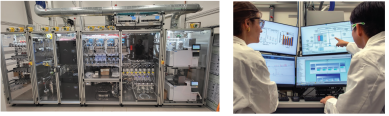
The four-parallel reactor setup (left) and control unit (right) at the NLE
A new research platform at ETH Zurich advances common testing standards and evaluates promising catalysts under industrially relevant conditions.
The National Laboratory of Electrocatalysis (NLE), established by NCCR Catalysis at ETH Zurich, aims to address these challenges. Now fully operational, the laboratory integrates advanced electrochemical reactors, precise operating control, and comprehensive product analysis to enable rigorous catalyst evaluation.
Gas control system (left), electrolyte temperature control system (middle), and the four electrocatalytic reactors in operation (right)
A central mission is to advance community standards for electrocatalyst testing. The NLE is already contributing to a collaborative effort to identify sources of experimental variability and develop reproducible testing protocols.
‘Promising catalysts often behave differently when evaluated in different electrochemical cells. The NLE allows us to understand these differences and establish more reliable comparisons,’ says Peter Broekmann, Professor at the University of Bern, who is collaborating with ETH Zurich.
Focused on CO2 electroreduction, the NLE features four parallel reactors capable of studying catalysts under industrially relevant conditions. The platform will serve as a benchmark for emerging catalysts and electrochemical systems, helping identify those with the greatest potential for practical application.
‘Electrochemistry has enormous potential for sustainable manufacturing. As a doctoral student, it is exciting to work with this advanced infrastructure and contribute to turning that potential into reality,’ says Isabelle Hengartner, doctoral researcher at ETH Zurich.
The NLE has already contributed to published research on the electrochemical conversion of CO2 into longer-chain hydrocarbons.
‘The NLE offers world-class capabilities and an exciting opportunity to connect research programs worldwide. Bringing together complementary expertise and infrastructure will be key to advancing electrochemical technologies’, says Fengwang Li, University of Sydney and GETCO2, Australia.
‘Discovering a promising catalyst is only the beginning. By combining advanced catalytic evaluation with reaction engineering, we can understand what limits performance, establish reliable benchmarks, and accelerate the development of viable electrocatalytic technologies’, says Javier Pérez-Ramírez, Director of NCCR Catalysis. ‘With the NLE, we want to establish the scientific basis for deciding which electrochemical technologies are worth pursuing’.
Left to right: Javier, Antonio, Sharon, Isabelle, and Seok in action
5.10.2026
Introducing two new Boost Fellowship
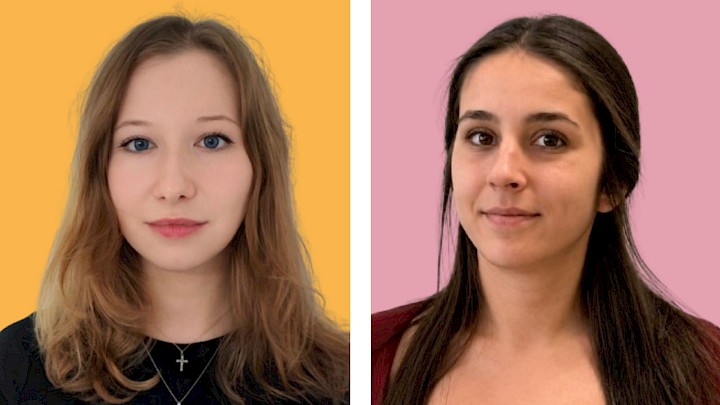
We are delighted to announce two new recipients of our Boost Fellowships, which support outstanding female researchers at the beginning of their PhD journey within NCCR Catalysis. Congratulations to Stavroula Kaplani and Emma Labordet!
Stavroula Kaplani, from Greece, completed her BSc and MSc in Chemistry at the University of Crete and will join Prof. Francesca Paradisi's group at the University of Bern. Her project focuses on the discovery of novel peptide ligases from extremophilic organisms for the efficient synthesis of linear and cyclic peptides. The aim is to develop new biocatalysts that contribute to more efficient and sustainable approaches to peptide synthesis.
Emma Labordet, from Poland, studied Nanoengineering and Materials Science at AGH University of Krakow and is a PhD student in Prof. Javier Pérez-Ramírez's group at ETH Zürich. Her project focuses on developing sustainable catalytic strategies for the upcycling of plastic waste, with the goal of transforming mixed polyolefins into valuable chemical products while considering both environmental and economic sustainability.
The Boost Fellowship provides first-year funding to outstanding female researchers pursuing a PhD within one or more NCCR Catalysis research groups. Beyond financial support, the fellowship offers recipients the opportunity to build scientific connections, develop new ideas, and grow within a multidisciplinary environment of research excellence. The initiative aims to strengthen diversity and support the next generation of scientists working towards sustainable chemistry and catalysis.
24.8.2026
Recipients of 2026 Young Talents Fellowship
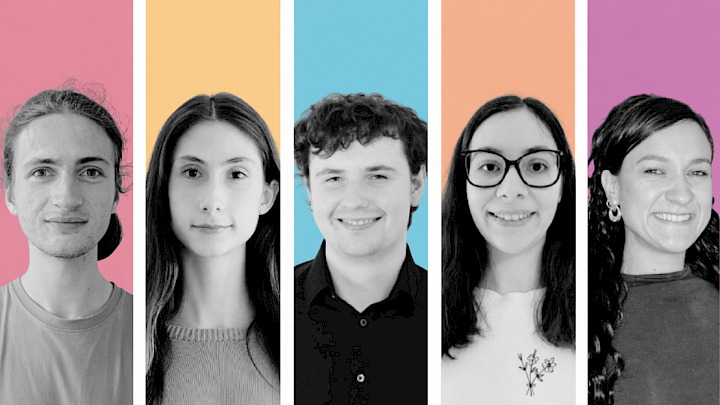
We’re delighted to announce the five recipients of our 2026 Young Talents Fellowship, who will begin their Master’s theses within our member groups in 2026. Congratulations and welcome to our network, Adrian, Iulia, Alexander, Patricia and Milena!
Adrian Hodum, from Germany, studies Molecular and Biological Chemistry at EPFL, and will join Prof. Waser’s group.
Iulia Mihail, from Italy, studies Chemical and Bioengineering at ETH Zurich, where she will join Prof. Guillén-Gosálbez, Prof. Bardow and Prof. Hellweg's groups.
Alexander Pitzer, from Germany, studies Chemical and Bioengineering at ETH Zurich, and will join the group of Prof. Pérez-Ramírez.
Patricia Simion from Romania, studies Chemistry at Durham University, and will join Prof. Bill Morandi’s group at ETH Zurich.
Milena Rodriguez, from Germany, studies Chemistry at the University of Basel, and will join Prof. Ward’s group.
The Young Talents Fellowship supports students with exceptional academic records and potential, while promoting diversity and fair representation in sustainable chemistry research. It offers recipients the opportunity to conduct a Master’s thesis in one or more NCCR Catalysis research groups and to develop scientific connections and ideas within a multidisciplinary environment. The initiative was launched in 2022.
16.7.2026
NCCR Catalysis Trailblazers: Abhinandan Nabera
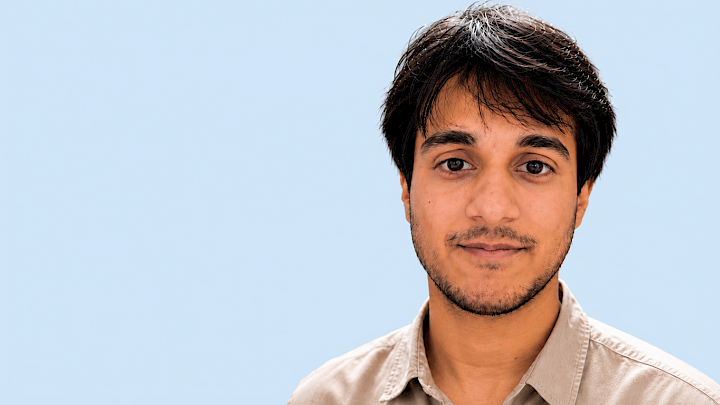
How can we ensure that tomorrow's green technologies are genuinely sustainable? We spoke with Abhinandan Nabera, whose PhD research at ETH Zurich combines catalysis with systems-level sustainability assessment to tackle exactly that challenge. He discusses the value of interdisciplinary research, collaboration across scientific fields, and the experiences that have shaped his journey as a researcher.
1. Tell us a little about yourself and your academic journey so far.
I’m Abhinandan, and I grew up in Chennai, India. As a kid, I spent hours taking apart RC cars and helicopters to figure out how they worked. That curiosity eventually led me to engineering, and I chose to study chemical engineering at NIT Tiruchirappalli before moving to ETH Zurich for my master’s degree. At ETH, I was introduced to life cycle assessment and sustainability analysis. I found myself drawn to a bigger question: are our green alternatives truly sustainable when we consider the whole picture? That question has shaped everything I’ve done since. I went on to pursue my PhD with Prof. Gonzalo Guillén-Gosálbez and Prof. Javier Pérez-Ramírez, where NCCR Catalysis gave me the opportunity to work at the intersection of process systems engineering and catalysis.
Abhi presenting at the NCCR Catalysis Annual Meeting 2025.
2. Can you describe your PhD research and the scientific challenge you are working to address?
My PhD asks a simple question: how do we know whether a greener way of producing a chemical is actually more sustainable? The chemical sector is responsible for around 10% of global greenhouse gas emissions, and many alternative production routes have been proposed, including CO₂ utilization, biomass, and plastic recycling. However, it is essential to assess whether these alternatives truly deliver environmental benefits. My research develops assessment frameworks that combine economic, environmental, safety, and resource-use metrics – something that is closely aligned with NCCR Catalysis' mission – allowing emerging technologies to be compared on a common basis before they reach industrial scale. Throughout my PhD, I worked closely with catalysis groups within NCCR Catalysis, using real experimental data rather than relying solely on assumptions, which made the assessments more realistic and relevant.
3. NCCR Catalysis fosters joint PhD projects across research groups. How would you describe your experience of being part of two research groups?
Being part of two research groups was the defining feature of my PhD and, at the same time, its greatest strength. I worked between the process systems engineering and catalysis communities – two fields that approach the same challenges from different perspectives.
Moving between them every day meant constantly learning, translating ideas, and finding a common language. It wasn’t always easy, and at the beginning the two perspectives often felt quite far apart. Over time, though, that gap became much smaller, thanks to the support and openness of collaborators from both groups. One of the biggest lessons from my PhD is that some of the most valuable research happens at the boundaries between disciplines rather than within a single field.
Abhi, together with his colleagues and research collaborators during the Escape 34 - PSE 24 in Florence, 2024.
4. In many collaborations, researchers remain primarily anchored in their own groups while interacting with others. In your case, the integration has been much deeper. What has made this level of collaboration possible?
For me, the key was moving from simply exchanging results to building genuine feedback loops. Rather than working in parallel, we created a process where my modelling helped guide the design of catalytic systems, while experimental results continuously improved my system-level analysis. This only worked because the expertise on both sides was truly complementary, connecting what happens inside the reactor with what happens at the process and systems level – something no single discipline could achieve on its own. Trust and shared goals were equally important. They developed gradually through years of working together on common challenges. NCCR Catalysis played a vital role by bringing different communities together, lowering barriers between disciplines, and creating an environment where this kind of collaboration became natural.
5. Beyond the scientific results, what has been the most rewarding aspect of your doctoral journey?
What I’ll remember most are the people. Having two supervisors meant benefiting from two different ways of thinking, which shaped me as a researcher far more than any individual result. Teamwork was just as important. Through NCCR Catalysis, I had the opportunity to interact with researchers from many different fields, and their questions often challenged me to rethink my own approach. Those exchanges changed how I work, teaching me to listen before defending an idea and to view problems from someone else’s perspective before jumping to conclusions. On a personal level, I also became more patient and more comfortable with uncertainty, learning to trust the research process even when the way forward wasn’t immediately clear.
6. What have you learned about yourself throughout this process?
More than any technical skill, my PhD taught me patience. Research rarely follows a straight path, and I learned to deal with uncertainty without losing confidence in the process. I also realized how much I value the people around me. I’m incredibly grateful to my supervisors and collaborators, who were always willing to answer questions, offer new ideas, or help me look at a problem from a different angle. Along the way, I also became less attached to individual outcomes and more focused on the learning process itself. That shift made it much easier to deal with setbacks and keep moving forward.
Abhi, together with supervisors Prof. Gonzalo Guillen Gosalbez (left) and Prof. Javier Perez-Ramirez (right). His thesis defense entitled "Integrating sustainability metrics for chemical systems across scales" took place in July 2026.
7. What advice would you give to young researchers considering interdisciplinary or highly collaborative PhD projects?
My biggest piece of advice is to stay genuinely open and not be afraid to ask questions, even if they seem basic. The most interesting ideas often emerge outside your comfort zone. I would also encourage young researchers to invest in relationships, not just in results. Be willing to help others when they need it. Those small interactions build trust, and trust is what makes strong collaborations possible. In the end, successful interdisciplinary research is built just as much on communication and openness as it is on technical expertise.
8. Looking ahead, what are your next steps and aspirations?
I would like to continue working in sustainability, developing practical metrics that help measure how sustainable a technology really is and making those tools accessible to non-experts. My hope is that sustainability assessment becomes a routine part of technology development, so that environmental impacts are evaluated early, transparently, and alongside technical performance.
Thank you so much for sharing your experience! We wish you the very best for your next steps.
Learn more about Abhi’s research here and connect with him on LinkedIn.
19.6.2026
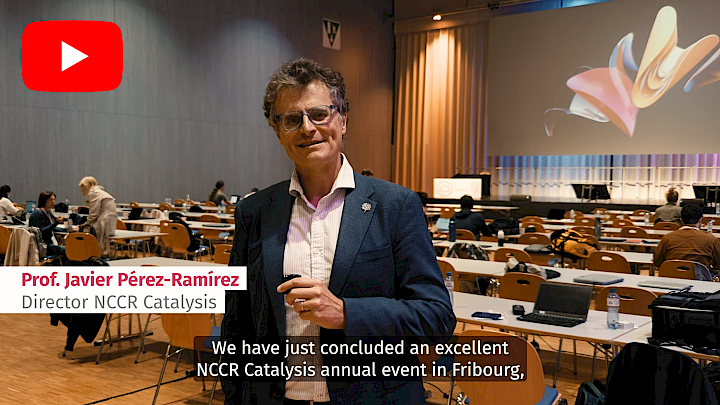
Celebrating the NCCR Catalysis Annual Event 2026 in Fribourg
Over 140 members of the NCCR Catalysis community came together in Fribourg from 8-10 June for three days of science, exchange, and collaboration.
Advancing sustainable chemistry through collaboration
The Annual Meeting showed once again what makes this network special: researchers from different disciplines, institutions, and career stages engaged in lively discussions, reconnecting in person and setting the tone for three days of scientific exchange toward sustainable chemistry.
The program opened with interactive workshops on entrepreneurship, digital research tools, life cycle assessment, machine learning, and FAIR data practices – reflecting the broad set of skills now needed to move catalysis research from fundamental insight toward real-world impact.
Across the following days, talks from early-career and senior researchers highlighted progress across all four Research Tracks, while poster sessions created space for lively discussion around new results, open questions, and future directions. The meeting also included updates on Phase III, communications, and data management, as well as community activities ranging from the Fribourg City Games to padel, museum visits, and dinner at Casino Fribourg.
The event closed with presentations from Turbo Grant recipients and Young Talents Fellows, followed by awards recognizing outstanding posters and talks. Beyond the formal program, the meeting was a reminder of the energy, creativity, and shared ambition that continue to drive the NCCR Catalysis community forward.
Looking ahead
The meeting also created space to reflect on the next steps for NCCR Catalysis. For a large collaborative program, this kind of shared planning is important, helping the community align, build on what has been achieved, and continue moving forward together. Above all, the Annual Meeting was a celebration of the people, ideas, and scientific progress that make the NCCR Catalysis community so strong.
The directors of the NCCR Catalysis center, Javier Pérez-Ramírez and Jerome Waser, closed the event by reflecting on progress achieved and outlining the importance of continued collaboration, innovation, and shared ambition for the years ahead. Watch the video and others on our NCCR Catalysis YouTube channel.
30.4.2026
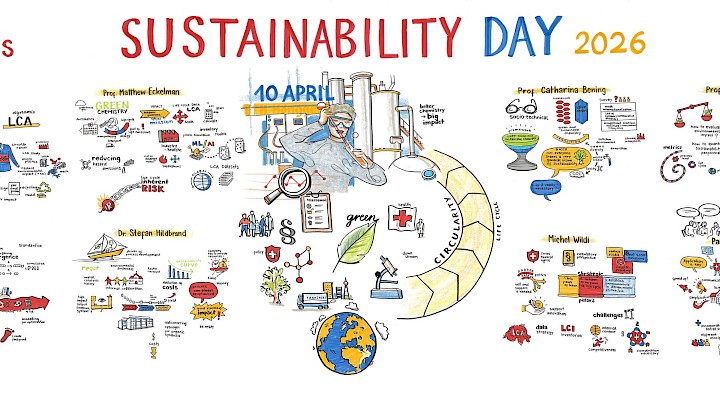
Key learnings from NCCR Catalysis Sustainability Day 2026
On 10 April 2026, NCCR Catalysis hosted its third Sustainability Day. The event brought together academic and industry experts to discuss approaches to sustainability assessment, complemented by a panel discussion that encouraged cross-disciplinary exchange. More than 110 participants joined on-site at the ETH Zurich Hönggerberg Campus and on-line via Zoom.
The program covered a wide range of topics focused on rethinking the chemical value chain, including systems thinking, circularity, sustainable process development and manufacturing, data availability and gaps, metrics for assessing sustainability, and the role of guidance and regulatory frameworks. Discussions also highlighted the persistent gap between scientific progress and its translation into measurable, real-world sustainability impact. Here are three key takeaways from the event.
1. Systems-level thinking as the starting point
Sustainability Day 2026 opened with a clear message: transforming chemical value chains requires a systems-level perspective. From circularity to life cycle assessment, discussions led by Prof. Yvonne van der Meer and Prof. Matthew Eckelman highlighted that sustainability must be embedded throughout the entire life cycle, from raw materials to end-of-life. This approach is central within NCCR Catalysis, where activities span the full value chain to identify more sustainable chemical production pathways. At the event, Prof. Gonzalo Guillén-Gosálbez introduced these efforts, illustrating how systems analysis can guide catalyst and process design toward broader environmental and economic goals.
2. Data and metrics remain a critical bottleneck
Industry perspectives showed how sustainability is being operationalized through metrics, data, and process design, while also revealing persistent challenges. Talks by Dr. Michael U. Luescher (Novartis) and Dr. Stefan Hildbrand (Roche) demonstrated that chemistry and catalysis are central to improving sustainability outcomes, but decisions must balance environmental impact with safety, cost, and performance. While data-driven tools are becoming more widely used, gaps remain, particularly in early-stage decision-making, where the greatest influence lies. The discussion made clear that progress depends on combining robust data with practical judgment to guide trade-offs and scale solutions effectively.
3. Closing the gap: From insight to implementation
Across the day, life cycle thinking emerged as a shared foundation, aligning perspectives from academia, industry, and policy. At the same time, Prof. Catharina Bening highlighted a persistent misalignment between sustainability frameworks and research practice, showing how NCCR Catalysis is working to better understand and bridge this gap through integrated, interdisciplinary approaches.
The panel participants agreed that earlier integration of sustainability, better data, and shared frameworks are essential to closing the gap between innovation and implementation. Programs like NCCR Catalysis play a key role in enabling this shift by connecting disciplines and stakeholders. The overall conclusion was pragmatic: advancing sustainable chemistry depends on stronger collaboration and the ability to consistently turn insight into impact.
Follow our LinkedIn page for the latest updates on upcoming events, expert talks, and featured speakers – including highlights from Sustainability Day 2026.
15.4.2026
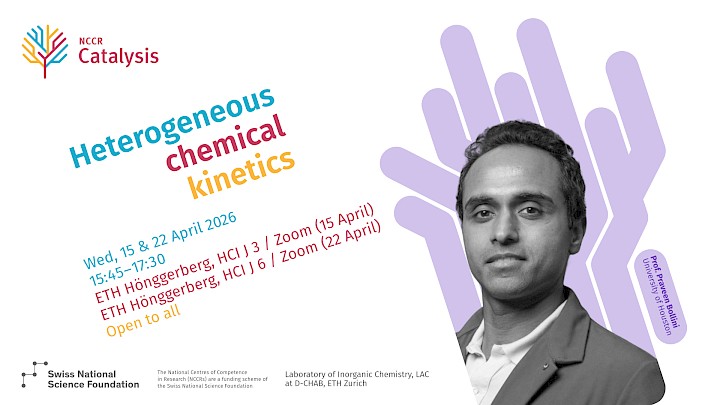
Lectures by Prof. Praveen Bollini on heterogeneous chemical kinetics
We have the pleasure of welcoming Prof. Praveen Bollini for an open-to-all lecture on Heterogeneous chemical kinetics, which will take place over two sessions in-person at ETH Zurich (Hönggerberg Campus) and via Zoom.
Chemical kinetic analysis represents a powerful tool in the chemical scientist’s arsenal, both for the comparative evaluation of catalyst performance and also for the detailed mechanistic interpretation of structure-catalytic property relationships. These lectures will discuss a subset of the most salient fundamental aspects of chemical kinetics on heterogeneous catalysts, with a specific focus on kinetic phenomena commonly encountered in chemistries of scientific and industrial significance.
15 April, 15:45-17:30, HCI J 3 or Zoom link: Part 1 - Measurement and Interpretation of Reaction Rates
Assessing heat and mass transfer limitations
Deconvoluting kinetic and thermodynamic contributions to measured rates
Addressing product inhibition
Dealing with complex reaction networks
22 April, 15:45-17:30, HCI J 6 or Zoom link: Part 2 - Advanced (but Simple) Concepts and Formalisms
Thermodynamic formulation of rates
Formalisms for evaluating rate-determining (or kinetically relevant) steps
Significance of stoichiometric numbers
Single-path and multi-path reaction sequences
Prof. Praveen Bollini is an Associate Professor of Chemical and Biomolecular Engineering at the University of Houston, where he leads a research group in catalysis and materials science. He received his B.S. from the Institute of Chemical Technology (2008), a Ph.D. from Georgia Institute of Technology (2013), and completed postdoctoral research at the University of Minnesota. His background includes experience in heterogeneous catalysis, including work with industry and advanced research labs. His research focuses on catalyst and adsorbent materials, especially understanding molecular-level diffusion, adsorption, and reactions in nanoporous systems. He is particularly known for work on carbon capture, CO2 conversion, and sustainable fuels, developing technologies that convert carbon dioxide and biomass into value-added chemicals.
26.3.2026
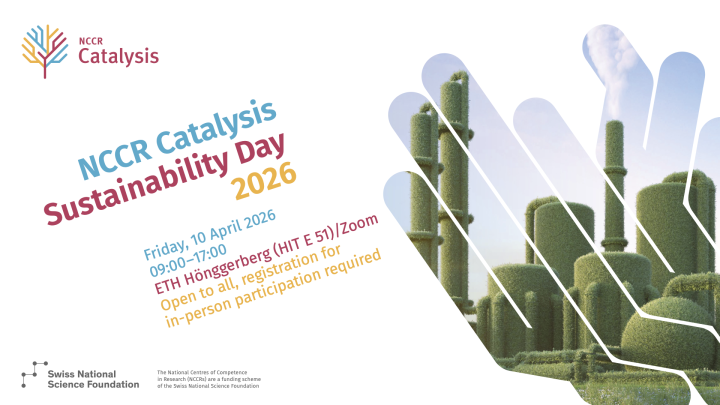
Join us for Sustainability Day on 10 April 2026
Join us on 10 April 2026 at ETH Zurich (Siemens Auditorium HIT E 51, ETH Hönggerberg Campus) for a full day dedicated to the future of sustainable chemistry and chemical manufacturing, see program here. The event will bring together leading academics, industry experts, and policy makers to explore how we can accelerate the transition toward more sustainable chemicals and manufacturing processes across the entire value chain.
This year, we have an excellent lineup featuring the following keynote speakers:
Prof. Yvonne van der Meer (Maastricht University, NL)
Prof. Matthew Eckelman (Northeastern University, USA)
Dr. Michael Umberto Luescher (Novartis, CH)
Dr. Stefan Hildbrand (Roche, CH)
Michel Wildi (Federal Office for the Environment FOEN, CH)
From NCCR Catalysis: Catharina Bening and Gonzalo Guillén-Gosálbez
The event will be held in-person (limited to 150 attendees) and online via Zoom. If you are interested in on-site attendance, please register through this form by 6 April. You are welcome to share this registration link with any colleagues who may be interested in attending. If you can't attend in person, you can join online at this link.
If you have any questions, please contact us at: .
We look forward to seeing you at Sustainability Day 2026!